
Bench press 3x5 @ 100kg
Squat 5x5 @ 120kg felt heavy
Clear exercise-first lines are the easiest to read and review: exercise, sets, reps, load, and a short note when needed.
Fi7Note lets you write workouts like quick gym notes instead of filling rigid forms between sets. Type naturally, review what was recognized, and save the workout as useful history.
Yes. Fi7Note is built for fast natural notes during training, then shows the recognized workout data before you save so the session can stay both quick now and useful later.
Most workout trackers are structured later, but slow during the workout. Notes and paper logs are fast during training, but weak when you want to find old weights, compare sessions, or check progress.
Fi7Note is built for the middle ground: fast workout notes now, usable workout history later.
You write the workout naturally. Fi7Note recognizes workout data inside the note, shows what it understood, and lets you review or correct the result before saving.
You do not need to choose every exercise from a form before you can start logging. Fi7Note starts with the kind of text people already write during training: compact sets, quick weight notes, cardio entries, and small comments.
These are examples, not a required syntax.
Bench press 3x5 @ 100kg Squat 5x5 @ 120kg felt heavy
Clear exercise-first lines are the easiest to read and review: exercise, sets, reps, load, and a short note when needed.
Bench press 100kg
8 / 8 / 7 / 6
You can keep the exercise context on one line and write the set results underneath when that is faster during training.
Pull-Ups 10,8,6
Dips BW 12 / 10 / 8
Bodyweight-style work can stay compact as comma or slash-separated rep lists when the exercise is explicit.
Skull crushers
20kgx8/15kgx8/10kgx8
Drop sets and load changes can stay in the same shorthand you would write in a quick gym note.
Run 8km 42min pace 5:15
Bike 45 min zone2
Cardio entries can include distance, time, pace, speed, or short zone notes without a separate logging flow.
Row 6x250m 60s rest
Cable row 3x10 @ 55kg coach: pause
Intervals, rest times, strength sets, and short coaching cues can live in one mixed workout note.
Free-text logging is only useful if you can trust what gets saved. That is why Fi7Note does not turn your note into a hidden result you cannot inspect.
Recognized workout data stays close to the original note through highlights and a clear review step. Before saving, you can review what Fi7Note understood, fix mistakes, add missing parts, and adjust highlights when recognition is close but not perfect.
A workout note should not become a dead note. Once saved, Fi7Note can make the workout available in History and Progress so you can come back to previous weights, old sessions, PRs, volume trends, cardio totals, exercise details, and muscle views.
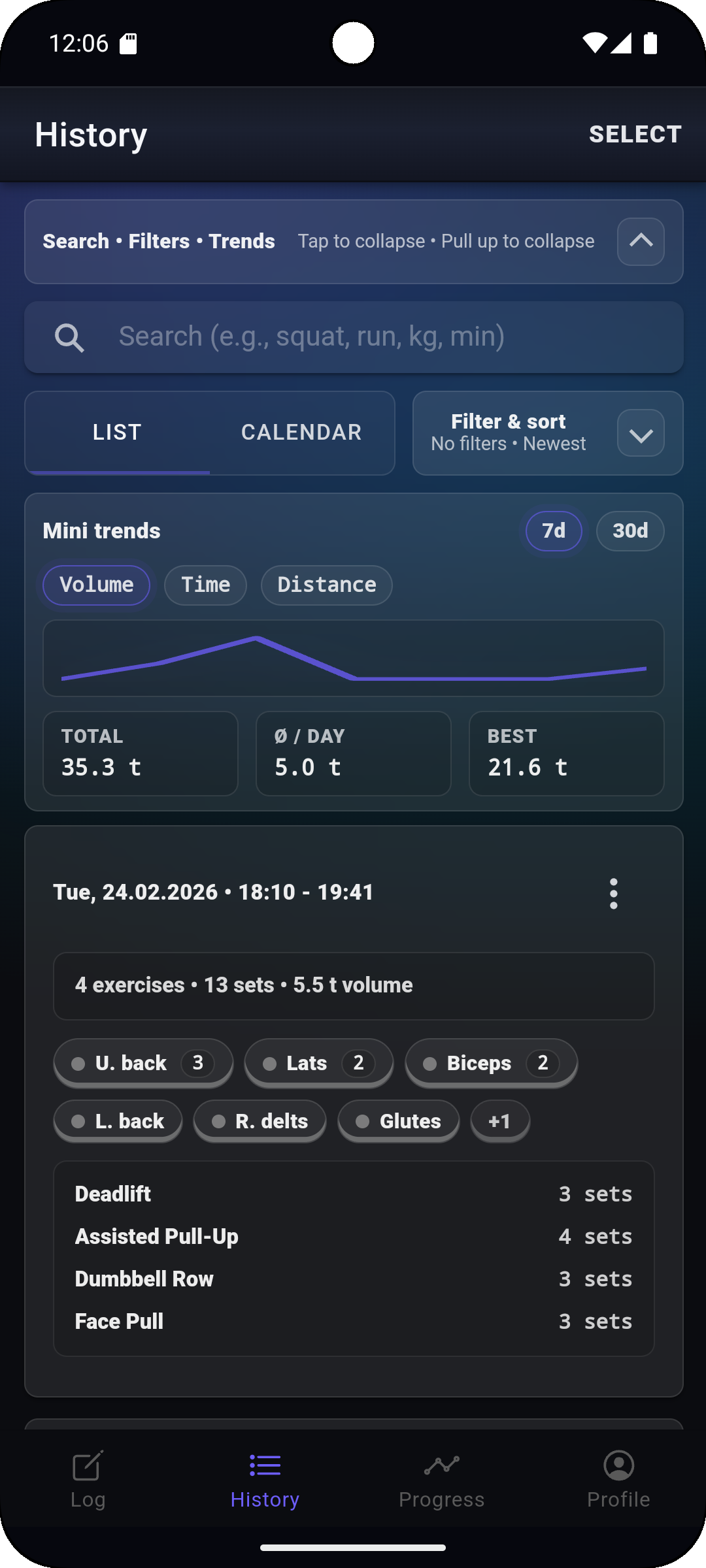
Saved workouts do not stay as dead text. History makes earlier sessions easier to search, reopen, compare, and reuse later.
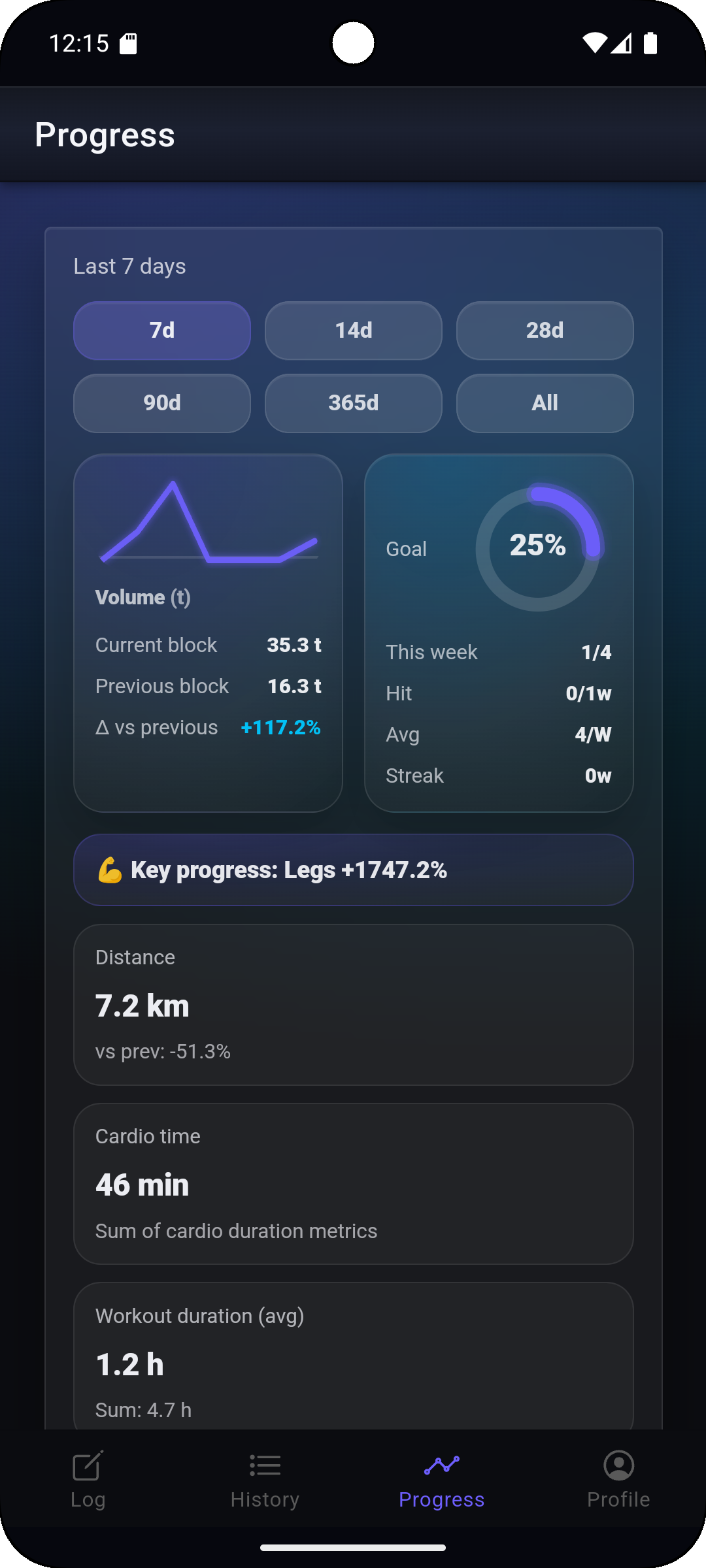
Once the workout record is there, Fi7Note can turn it into PRs, volume trends, cardio totals, and other views that answer later training questions.
The point is not just to log faster. The point is to log fast without losing the value of structured workout data later.
Real training notes are rarely clean. People use shorthand, different units, mixed strength and cardio entries, rough exercise names, and quick remarks between sets.
Fi7Note is built around that reality. It can recognize workout data from natural notes, handle unit differences, derive cardio values from entered time and distance, and show exercise suggestions when a name is uncertain.
Fi7Note is an Android-first, local-first workout notes app. Core recognition runs on-device, workout history is primarily local, and the app remains usable offline once the required assets are available.
That makes Fi7Note a practical gym log app for people who want fast logging without turning their training data into a cloud-first workflow.
Fi7Note is built for people who want workout logging to feel fast during training and still be useful later.
Questions people ask when looking for a workout tracker that supports natural typing.
Yes. Fi7Note lets you type workouts as natural gym notes, then shows recognized workout data so you can review and correct it before saving.
No. Fi7Note is built for realistic workout notes, shorthand, mixed entries, and different ways of writing sets, reps, weight, cardio, intervals, and comments. Clear exercise context helps: "Bench press 3x5 @ 100kg", "Pull-Ups 10,8,6", "Run 5km 27:30", and "Row 6x250m 60s rest" are better public examples than bare number lists without an exercise.
You can review the recognized data before saving. Fi7Note lets you correct highlights, add missing parts, remove wrong highlights, and adjust detected ranges when needed.
Yes. Fi7Note is designed for mixed workout notes, so strength work, cardio values, and short remarks can live in the same entry.
Fi7Note can derive cardio values such as pace or speed when enough information is present, for example from time and distance.
Yes. Saved workouts can feed History and Progress, including previous weights, PRs, volume trends, cardio totals, exercise details, muscle views, and customizable Progress cards.
Yes. Fi7Note is local-first, core recognition runs on-device, and workout history is primarily stored locally. The app is also usable offline once the required assets are available.
Fi7Note is currently Android-first and available through Google Play.